

.webp)


Legendary Actions 5e: Balancing the Scales of Epic Combat
Updated: May 1
Imagine the scene: a party of four hardened adventurers finally kicks down the obsidian doors of the Dread Lich’s sanctum. They’ve spent months tracking this villain, braving traps, and slaughtering mindless undead. They roll initiative. The rogue goes first, delivering a staggering sneak attack. The paladin follows up with two thunderous smites. The wizard drops a high-level control spell. By the time the Lich finally gets its turn, it's already at half health, and it hasn't even cast a single spell. It feels anticlimactic, doesn't it? This is the fundamental "action economy" problem that has plagued solo boss encounters in tabletop gaming for decades. How does a single creature stand a chance against a coordinated team that acts four times for every one of its actions? The answer in Dungeons & Dragons 5th Edition is a specialized mechanical toolkit known as Legendary Actions 5e.
Legendary Actions are not merely "extra turns." They represent a sophisticated structural solution designed to break the static nature of turn-based combat and provide elite monsters with the agency they need to survive the onslaught of a player party. These mechanics allow a creature to act outside the constraints of its own initiative, responding to player movements and attacks in real-time. Without them, even the most powerful legendary monsters in the Monster Manual would be little more than bags of hit points waiting to be deflated. To truly master the art of the boss fight, a Dungeon Master must understand not just the "how" of these actions, but the tactical "why." Why do we give a dragon the ability to beat its wings at the end of a rogue's turn? Why does a beholder get to fire extra eye rays when it's not even its turn? It's about maintaining the threat level and ensuring that the narrative climax of a campaign feels as epic as the build-up suggests.

The Mechanics of Off-Turn Agency
At its most basic level, a legendary action is a special type of action that a creature can take only at the end of another creature's turn. Most legendary creatures are granted a pool of three legendary action points (LAPs) per round. These points represent the creature's "extra" energy and focus. At the start of the monster's own turn, this pool completely refreshes, ensuring that the creature enters every round of combat with its full suite of reactive capabilities.
Feature | Standard Action | Legendary Action | Reaction |
Timing | On the monster's own turn | End of any other creature's turn | Specific trigger (e.g., an attack) |
Resource Pool | One action per turn | Typically 3 points per round | One reaction per round |
Recovery | Start of monster's turn | Start of monster's turn | Start of monster's turn |
Constraint | Fixed initiative position | End of player/NPC turns only | Requires a specific trigger event |
This mechanical structure creates a "heartbeat" for the encounter. Instead of a long silence while players take their turns, followed by one big burst of activity from the boss, the boss remains present throughout the entire round. For players, this means that the battlefield state is never "safe." If a wizard moves into a clear line of sight to cast a spell, they must account for the fact that as soon as their turn ends, the monster might use a legendary action to move toward them or unleash a preemptive strike.
Expenditure and Cost Scaling
Not every legendary action is created equal. In the design of legendary creatures 5e, actions are assigned a cost, usually ranging from one to three points. A simple melee attack or a short repositioning move typically costs one point. This allows the monster to act after three different players' turns. However, more devastating abilities, such as a dragon’s "Wing Attack" or a lich’s "Disrupt Life," often cost two or three points.
This cost system introduces a layer of resource management for the Dungeon Master. Is it better to use three separate tail attacks to whittle down the party's health, or should the dragon save its points to unleash a massive wing buffet that knocks the entire frontline prone?. The choice depends entirely on the tactical needs of the moment. If the party is tightly grouped, an expensive area-of-effect (AoE) action is devastating. If the party is spread out and targeting the boss from multiple angles, multiple one-point actions allow the boss to respond to each threat individually.

The Impact of Conditions and Surprise
It's vital to remember that legendary actions are still "actions." This means that if a creature is incapacitated, it loses the ability to use its legendary pool. Conditions such as Stunned, Paralyzed, or Petrified are the ultimate weapons for players against legendary monsters, as they don't just stop the monster's main turn they strip away its off-turn agency entirely.
Surprise also plays a crucial role in these encounters. If a party manages to ambush a legendary creature, that creature cannot use any legendary actions until after its first actual turn in the initiative order has concluded. This provides a massive window for a stealthy party to deal catastrophic damage before the boss can even begin its off-turn responses. For DMs, this underscores the importance of a legendary creature’s lair defenses; a dragon that is easily surprised in its sleep is a dragon that won't survive the first round of combat.
Tactical Philosophy: When and How to Use Legendary Actions
Dungeon Masters often fall into the trap of using legendary actions as simple damage-adders. While dealing damage is important, the true value of legendary actions 5e lies in their ability to manipulate the battlefield and disrupt player strategy. A boss that just stands still and hits the person in front of it is a boring boss. A boss that teleports behind the healer, knocks the fighter prone, and summons a wall of fire between the two is a memorable legend.
Movement as a Defensive Tool
The most powerful legendary action in a monster’s kit is often movement. Many legendary creatures have an option that allows them to move up to their full speed without provoking opportunity attacks. Why is this so critical? In 5e, "locking down" a monster is a primary goal for melee characters. By using a legendary action to move at the end of a player’s turn, the boss can effectively negate the tactical positioning the party spent their entire round setting up.
Consider a scenario where a fighter and a paladin move in to flank a vampire. At the end of the paladin’s turn, the vampire uses a legendary action to move 30 feet away to a nearby balcony. Suddenly, the melee characters are stranded in the middle of the room, and the wizard is now the closest target to the boss. This constant repositioning forces players to spend their own actions on movement rather than just attacking, which is a subtle but highly effective way to balance the action economy.
Targeting the Backline
Legendary actions provide the perfect opportunity for "intelligent" targeting. Standard monsters often get bogged down fighting the high-AC "tank" in the front. A legendary creature, however, can use its off-turn actions to harass the squishy casters in the back. If a wizard casts a powerful concentration spell, the boss shouldn't wait until its next turn to try and break it. It should use a legendary action attack immediately after the wizard's turn ends to force a concentration check.
This proactive approach makes the boss feel more menacing. It isn't just reacting to damage; it's actively trying to shut down the players' most effective tools. By spreading damage across the party rather than focusing only on the character with the most hit points, the DM ensures that every player feels the pressure of the encounter.
Key Takeaways for DMs
Tip | Strategic Application |
Reposition Constantly | Use movement actions to avoid being "pinned" by melee fighters or trapped in AoE spells. |
Disrupt Concentration | Target casters with legendary attacks immediately after they cast a spell to force early concentration checks. |
Save Points for AoE | If players clump together, don't waste points on single attacks; save for a multi-point "Wing Attack" or similar burst. |
Narrate the Action | Don't just roll dice; describe the creature's preternatural speed and how it seems to anticipate every move. |

Legendary Resistance: The Safety Net for Bosses
Hand-in-hand with legendary actions comes the mechanic of Legendary Resistance. This feature allows a creature to choose to succeed on a saving throw that it has failed, typically three times per day. While some players find this mechanic frustrating, it's a necessary evil in the world of high-level 5e combat. Without it, a single Polymorph or Hold Monster spell could end a 40-hour campaign arc in a single die roll.
The Meta-Game of Burning Resistances
Legendary Resistance creates a specific "cat and mouse" game between the players and the DM. Players know the boss has these resistances, so they will often try to "bait" the DM into using them on lower-level spells. A smart DM must decide which effects are worth a resistance and which can be endured. Is it worth using a resistance to avoid being Charmed for one round? Probably. Is it worth using one to avoid taking 40 damage from a Fireball? Usually not, unless the boss is already near death.
The best way to handle this mechanic is to treat it as a narrative resource. Instead of simply saying, "The dragon uses a legendary resistance to pass," describe the dragon’s sheer force of will. Describe how the wizard’s spell begins to take hold the dragon’s skin starts to turn to stone, but then the beast unleashes a deafening roar, and the magical encrustation shatters into dust. This makes the "burned" resistance feel like a hard-won victory for the players, as they have visibly drained the creature’s stamina.
Indicators of Progress
One common mistake is keeping the number of remaining resistances a secret. While some DMs prefer this for "immersion," it often leads to player frustration. A more engaging approach is to provide a physical indicator. Perhaps the lich has three glowing soul-gems on its staff that shatter one by one as resistances are used. Or maybe the dragon’s eyes lose their magical glow as its legendary reserves are depleted. This turns the encounter into a tactical puzzle where the players can see their progress toward "unlocking" the boss for a final, finishing spell.
The 2024 Evolution: Actions vs. Reactions
As we move into the era of the 2024 D&D rule updates, the design of legendary monsters is shifting. Many new stat blocks are moving away from "Legendary Actions" in favor of a "Multiple Reactions" system. While this might seem like a minor semantic change, it significantly alters how the boss interacts with the initiative order.
Why the Change?
The traditional legendary action system requires the DM to wait until the end of a turn to act. The new reaction-based system allows the monster to act during a player’s turn in response to specific triggers. For example, if a fighter moves toward a dragon, the dragon might have a reaction to strike the fighter as they move, potentially stopping them in their tracks before they even reach melee range.
This makes combat feel much more interactive and visceral. However, it also introduces a new vulnerability. Effects that "deny reactions"—such as a monk's Stunning Strike or the Shocking Grasp cantrip—become incredibly powerful against these new monsters. If a monster’s entire defensive and offensive suite is tied to its reactions, a single successful hit from a cantrip could theoretically turn off its legendary status for a round. To counter this, the 2024 Monster Manual gives these creatures higher saving throw bonuses and more legendary resistances to ensure their "reaction engine" stays running.
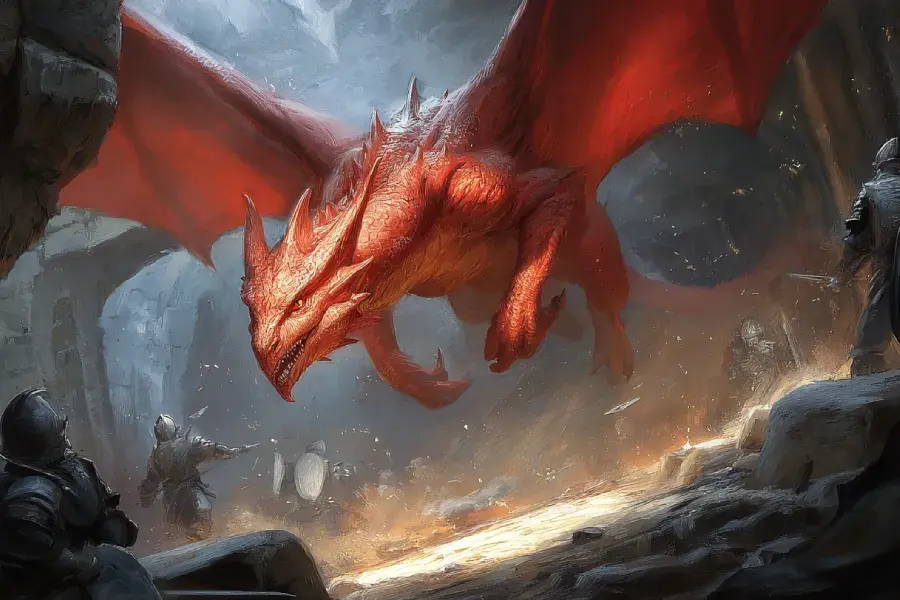
Lair Actions: The Third Pillar of Boss Combat
To truly challenge a veteran party, a legendary monster needs more than just off-turn actions; it needs a home-field advantage. Lair actions represent the environment itself acting as a combatant. These happen on initiative count 20 every round.
Lair actions should never just deal damage. They should provide utility that the monster's own actions don't cover. A black dragon might use a lair action to create pools of magical darkness, which it can then use to hide in between its legendary actions. An aboleth might use a lair action to pull creatures into the water, setting them up for its multi-attack on its actual turn.
Regional Effects: Setting the Stage
Regional effects are the long-term changes a legendary creature makes to the world. These don't usually affect combat, but they are essential for world-building. If the players are traveling through a forest where the water is warm and tastes of sulfur, they know they are approaching a red dragon's lair. These effects build tension and signal to the players that the "rules" of the game are about to change. When they finally see the boss, they aren't surprised by its power they've been experiencing it for the last ten miles of their journey.
Creating Your Own Legendary Monsters
You don't have to wait for your players to reach high levels to use these mechanics. Legendary actions can be applied to lower-CR creatures to make "mini-bosses" feel unique. A bandit captain with one or two legendary actions to "Command" his subordinates to move or attack can be a much more engaging encounter for a 3rd-level party than just a high-HP ogre.
Designing the Point Costs
When homebrewing legendary actions, follow the "Rule of Three." Give the creature three points and three different options:
A One-Point Attack: A basic hit with a natural or manufactured weapon.
A One-Point Movement: A way to reposition without provoking opportunity attacks.
A Multi-Point Utility: A roar that frightens, a spell, or a devastating area-of-effect attack.
By following this template, you ensure that the monster has variety. It isn't just attacking more; it's engaging with the battlefield in different ways every round. If you find the boss is dying too quickly, don't just add more health add a legendary action that allows it to regain hit points or summon minor minions to distract the players.
Tweaking Hit Points for Longevity
D&D combat is mathematically predictable. If your party deals an average of 100 damage per round and the boss has 200 HP, the fight will last two rounds. To ensure your legendary actions actually get used, you need to ensure the boss survives long enough to use them.
Instead of using the average HP listed in the stat block, consider "maxing" the monster's hit dice. For example, if a monster has 15d10 + 60 HP, the average is 142. The maximum is 210. Those extra 68 hit points can provide the crucial third round of combat that allows the boss to feel like a real threat. If the party is truly high-powered, you might even consider doubling the HP, though you should be careful not to make the fight feel like a tedious "slog".

Case Study: The Beholder vs. The Party
Let’s look at a Beholder to see how all these parts move together. A Beholder on its turn uses its Eye Rays. It’s a random, chaotic effect. But its legendary actions allow it to use more Eye Rays.
Turn Start: The Beholder uses its main action to fire three random rays. It hits the fighter with a Paralyzing Ray and the wizard with a Fear Ray.
End of Fighter's Turn: The Beholder uses 1 LAP to fire a random ray at the rogue, who just tried to hide.
End of Rogue's Turn: The Beholder uses 1 LAP to fire another ray at the cleric who is trying to heal the fighter.
End of Wizard's Turn: The Beholder uses its final LAP to fire a ray at the wizard, trying to break their concentration on Haste.
In this single round, the Beholder has acted four separate times. It has responded to every major threat the party posed. It didn't just sit there and take damage; it was an active, chaotic participant in every single turn of the round. This is the goal of legendary actions 5e.
The Psychology of the Legendary Encounter
Why do we do all this? Is it just to win against the players? Of course not. It's about drama. A boss fight should feel like a struggle. It should feel like the players are barely surviving against a force of nature.
Legendary actions are the tool that allows you to provide that drama. They allow the boss to "interrupt" the players' moment of triumph with a sudden reversal of fortune. They allow the boss to escape a "sure-fire" trap. They allow the boss to fight back even when it's not "their turn".
When you use legendary actions well, your players won't feel cheated; they'll feel challenged. They'll start talking about the fight in terms of "How do we stop its movement?" or "How do we burn its resistances?" instead of just "How much damage did I do?". It shifts the game from a math problem to a tactical puzzle.
Practical Advice for New and Veteran DMs
If you're a new DM, start simple. Use the creatures as they are written in the Monster Manual. Pay attention to the "End of Turn" trigger don't forget to use your points! It's very easy to get caught up in the players' turns and forget that your dragon can act too. Keep a d3 or three coins on the table to track your legendary action points visually. When you spend one, move the coin. It’s a great reminder to yourself and a fun way to build tension for the players.
If you're a veteran DM, look for ways to combine these mechanics. Give your boss legendary actions that interact with its lair. Give it actions that allow it to use its environment. Instead of just a "Tail Attack," give it a legendary action to "Shatter the Pillars," causing falling debris that creates difficult terrain and deals damage in a radius.
When NOT to Use Legendary Actions
Legendary actions are for "Bosses." If you give every monster in a group legendary actions, the combat will become incredibly slow and tedious. Use them sparingly. They are a signal to the players: "This is a big fight. This is important". If you have a group of enemies, only the leader should have legendary actions. The others are just minions, there to provide the leader with the space they need to be legendary.
Similarly, don't use legendary actions to "undo" a player's clever plan if that plan was well-earned. If the players managed to sneak into the lair and set up a complex trap, let the trap work! Maybe the boss uses its legendary actions to try and escape the trap, but don't just "hand-wave" the players' efforts. The mechanics are there to enhance the story, not to protect the DM's favorite NPC.


Comments